
The 5 Most Profitable Restaurant Layout Types
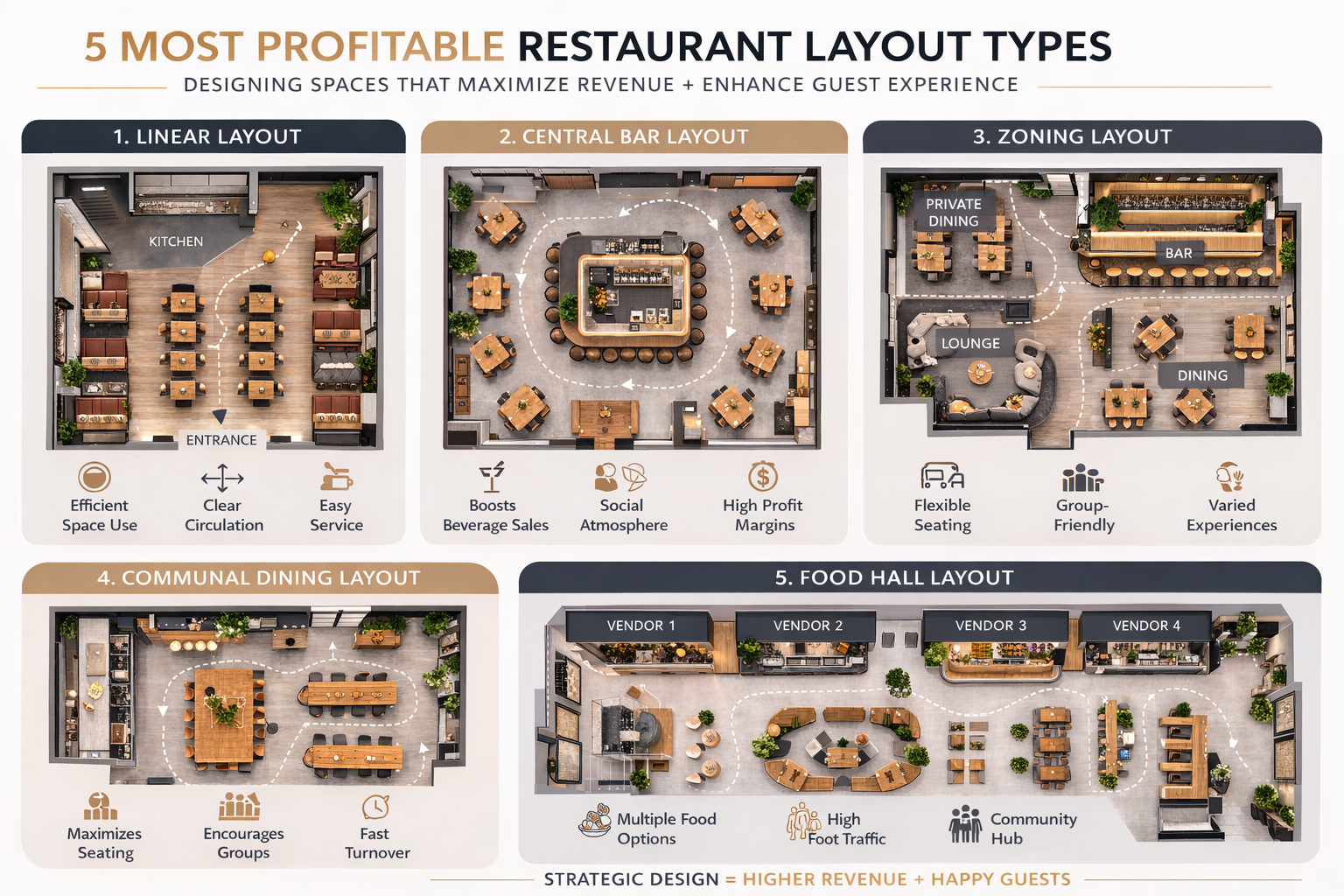
When planning a restaurant, layout design is one of the most important factors affecting profitability. The arrangement of seating, circulation paths, and service areas directly impacts how efficiently staff can operate and how comfortably guests can dine.
Different restaurant concepts benefit from different layout strategies. Understanding the strengths of each layout type can help restaurant owners maximize both operational efficiency and revenue.
Below are five restaurant layouts that consistently perform well from a business perspective.
1. The Linear Layout
The linear layout organizes seating along a central aisle, often with the kitchen located at the back of the restaurant.
This layout works particularly well in narrow storefront spaces commonly found in urban areas.
Advantages
• Efficient use of limited space
• Clear circulation path for servers
• Easy customer navigation
• Good visibility across the dining area

Courtesy of Hans Kuitjen
This layout is commonly used in cafés, fast-casual restaurants, and small bistros.
2. The Central Bar Layout
In this layout, the bar becomes the focal point of the restaurant, with dining tables arranged around it.
Bars generate some of the highest profit margins in the hospitality industry, making this layout highly effective for restaurants that emphasize beverage sales.
Advantages
• Increased beverage revenue
• Strong visual focal point
• Encourages social interaction
• Efficient service access

Many upscale casual restaurants and gastropubs use this layout successfully.
3. The Zoning Layout
The zoning layout divides the restaurant into several distinct seating areas, each offering a slightly different atmosphere.
Zones may include:
• lounge seating
• traditional dining tables
• bar seating
• semi-private booths
Advantages
• Accommodates different guest preferences
• Supports groups and private dining
• Creates visual interest
• Encourages longer stays

Zoning Areas
This layout works well for larger restaurants and upscale dining establishments.
4. The Communal Dining Layout
Communal dining layouts use large shared tables that encourage social interaction among guests.
These layouts are popular in modern food halls and contemporary dining concepts.
Advantages
• Maximizes seating efficiency
• Encourages group dining
• Supports high turnover during peak hours
• Creates an energetic atmosphere

Courtesy of Sixty Vines Restaurant Design
Communal layouts are particularly effective in urban environments and casual dining concepts.
5. The Food Hall Layout
Food halls have become one of the fastest-growing restaurant concepts in mixed-use developments. Instead of a single kitchen, food halls feature multiple vendor stalls surrounding shared seating areas.
Advantages
• Variety of food options for guests
• Strong foot traffic for retail developments
• Flexible vendor rotation
• Community gathering atmosphere

Reading Terminal Market - Philadelphia, PA
Developers increasingly incorporate food halls into commercial projects because they attract consistent visitor traffic.
Why Restaurant Layout Matters
The right layout improves both operational efficiency and customer satisfaction. Effective restaurant space planning helps ensure that staff can move efficiently while guests enjoy a comfortable and memorable dining experience.
When thoughtfully designed, restaurant layouts can increase seating capacity, improve service speed, and encourage repeat customers.
Final Thoughts
Restaurant layout design is a critical component of successful hospitality environments. By carefully selecting the layout that best supports their concept and operational needs, restaurant owners can significantly improve both guest experience and long-term profitability.
About Verden Interior Design Studio
Verden Interior Design Studio collaborates with developers, restaurateurs, and hospitality entrepreneurs to create restaurant environments that balance aesthetics, functionality, and operational efficiency. Our studio specializes in designing commercial spaces that enhance guest experience while supporting business performance.