
The Role of Interior Designers in Restaurant Development
Opening a restaurant involves far more than selecting furniture and finishes. Restaurant development requires careful planning that balances aesthetics, operational efficiency, branding, and customer experience.
Interior designers play a critical role in this process by helping restaurant owners and developers transform an idea into a functional and memorable dining environment. From early concept development to final installation, interior designers contribute strategic expertise that can significantly impact the long-term success of a restaurant.
Concept Development and Brand Identity
Every successful restaurant begins with a clear concept. The interior design should communicate the restaurant’s identity and reinforce its brand story.
Interior designers help translate the restaurant’s concept into a physical environment by considering:
• cuisine type and culinary culture
• target demographic and customer expectations
• atmosphere and mood of the dining experience
• materials, colors, and textures that support the brand
For example, a modern sushi restaurant may emphasize minimalist design and dramatic lighting, while a Mediterranean restaurant might feature warm woods, natural stone, and earthy color palettes.
When design aligns with the restaurant’s brand identity, the space becomes part of the overall dining experience.

Example of Branding Items for Restaurant
Space Planning and Operational Efficiency
One of the most important contributions interior designers make is space planning. Restaurant layouts must accommodate both guests and staff while maintaining efficient operations.
Interior designers analyze how the restaurant will function and create floor plans that include:
• optimal seating arrangements
• kitchen and prep area coordination
• server circulation routes
• bar placement and service stations
• ADA accessibility compliance
Thoughtful space planning improves workflow, reduces congestion, and allows restaurants to serve guests more efficiently.
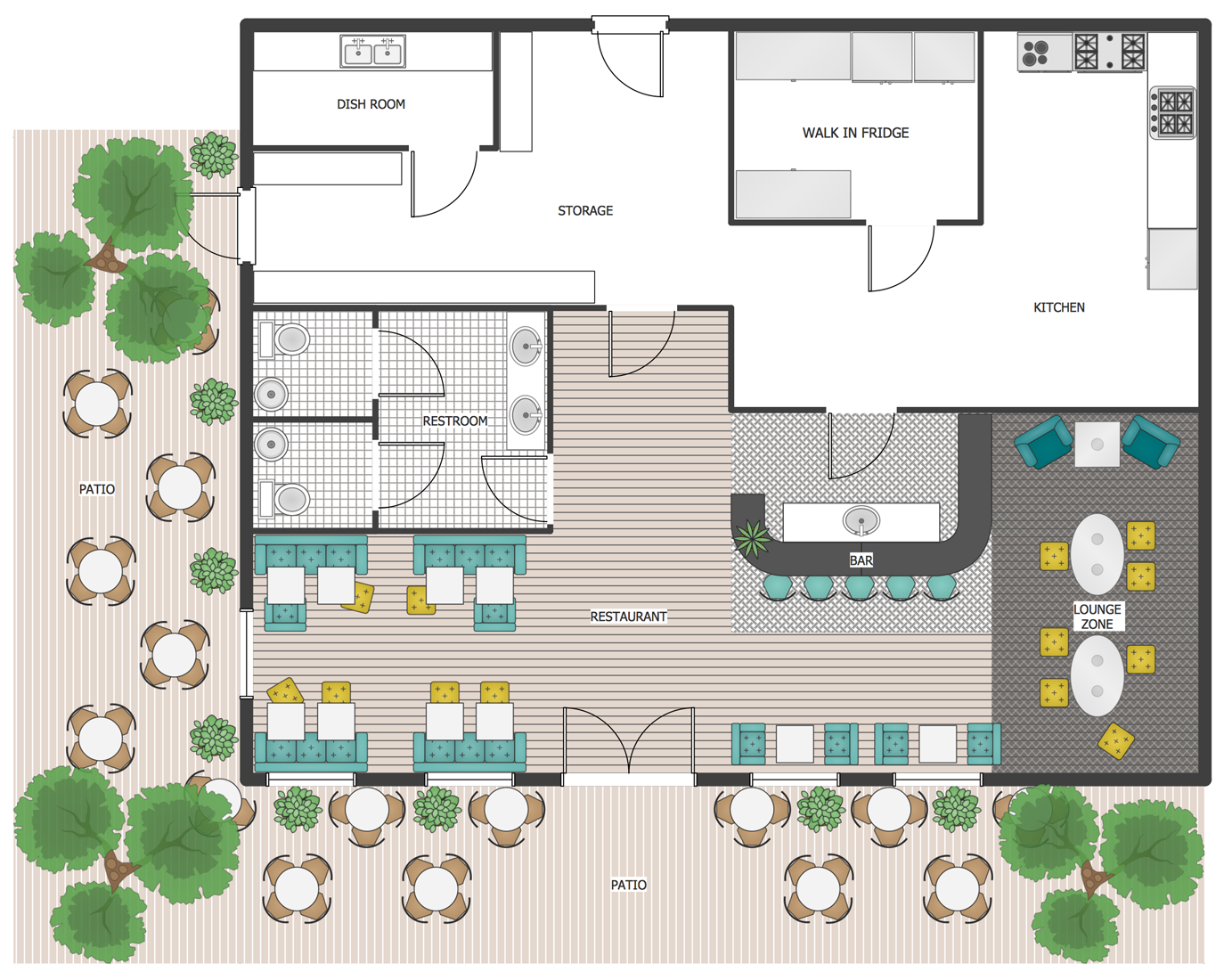
Conceptual space plan of a Restaurant.
Enhancing the Guest Experience
Restaurant interiors strongly influence how guests perceive the dining experience. Interior designers carefully craft environments that create comfort, atmosphere, and emotional connection.
Key elements that shape the guest experience include:
• lighting design and ambiance
• seating comfort and spacing
• acoustics and sound control
• visual focal points and architectural features
A thoughtfully designed environment encourages guests to relax, stay longer, and return again in the future.

Supporting Restaurant Marketing and Brand Visibility
Today’s restaurants must compete not only through food and service but also through visual appeal. Interior designers often create spaces that encourage customers to photograph and share their experiences online.
Design elements that support marketing include:
• signature lighting installations
• distinctive feature walls or artwork
• dramatic bar designs
• memorable architectural elements
These visual moments help restaurants generate organic marketing through social media and customer engagement.
Collaboration with Developers and Consultants
Restaurant development projects often involve collaboration among multiple professionals, including architects, engineers, contractors, and branding consultants.
Interior designers work alongside these professionals to ensure the design vision is carried through the entire project. This collaboration may include:
• coordinating design details with architects and engineers
• selecting materials and finishes that meet durability requirements
• reviewing construction drawings and shop drawings
• assisting with furniture, lighting, and equipment specifications
This coordination helps maintain consistency between the design concept and the final built environment.
Bringing the Vision to Life
Once construction begins, interior designers often continue to support the project through installation and final styling. This stage may include:
• furniture and lighting placement
• decorative accessories and artwork
• final design adjustments
• quality review of installed materials and finishes
These final details ensure the restaurant reflects the original design vision and delivers a polished experience for guests.
Final Thoughts
Interior designers play an essential role in restaurant development by combining creativity with strategic planning. Their expertise helps restaurant owners and developers create spaces that are visually compelling, operationally efficient, and aligned with the restaurant’s brand identity.
By involving an interior designer early in the development process, restaurant owners can avoid costly design mistakes and create dining environments that support long-term business success.
About Verden Interior Design Studio
Verden Interior Design Studio collaborates with developers, restaurateurs, and hospitality entrepreneurs to design thoughtfully planned restaurant environments that balance aesthetics, functionality, and brand identity. Our studio provides strategic design solutions that enhance guest experience while supporting efficient restaurant operations.